|
| Decorated Indian Elephant |
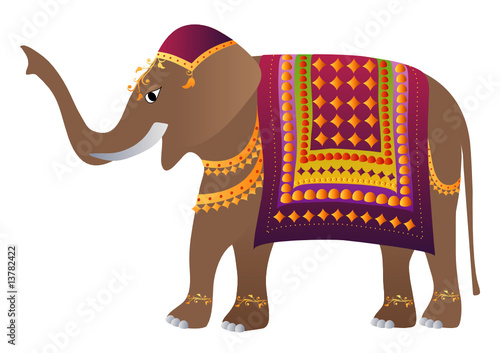 |
| Decorated Indian Elephant |
 |
| Decorated Indian Elephant |
 |
| Decorated Indian Elephant |
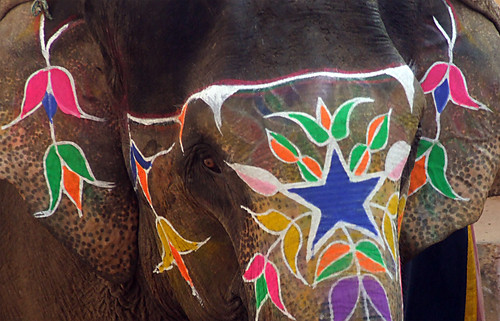 |
| Decorated Indian Elephant |
|
| Decorated Indian Elephant |
|
| Decorated Indian Elephant |
|
| Decorated Indian Elephant |
|
| Decorated Indian Elephant |
|
| Decorated Indian Elephant |

 Their habitats are lakes and rivers of South and Central America. The interesting fact about Anacondas is that they are so to say independent and capable of taking care of themselves as soon as they’re born! Well of course they are, since they are incredibly large from the first day of their lives and don’t need to worry about being eaten.
 Comparing to Anaconda, the body of the Reticulated Python is not so heavy like that of an Anaconda. Nevertheless, it is capable of killing an adult man thanks to its strong muscles and contractions they produce. Regardless to that, the Reticulated Pythons are considered to be less dangerous than Anacondas, and there were very few incidents of this kind reported.
 |
An Indonesian caught a 14.85m long Python weighing 447kg. Up to now, this python is regarded as the world’s largest snake. It was captured in the jungle of the western part of Sumatra Island. The owner of the snake later sold this snake to a park and the staff at the park gave it a name as “guihua”. “guihua” here, in general, refers to a type of a flower. That is why this name may sound gentle to hear, but it is indeed a scary scene when “guihua” opens its mouth while attacking its enemy. It can swallow the whole body of a human in a very short period. According to the Indonesian media, an examination on its length, weight and species has been carried out extensively by Indonesia’s National Institute of Science, Institute of Agriculture and other academic institutions. Many scientists said that they had never seen such a long snake. According to the sources of Indonesia, it is not an easy task to subdue such a gigantic snake. It usually needs an accumulation of 8 to 10 strong men’s energy to get hold of this snake. Previously, the Guinness World Records has recorded the world’s longest snake which has a length of 10m. However, this snake was shot in 1912 in Indonesia. Meanwhile, the scientists disclosed that the discovery of this world’s longest snake is the Southeast Asia’s indigenous snake. This snake is commonly seen in Indonesia, Philippines but generally its length hardly reached to such extend.  |
 |
Snakes kill more than 90,000 around the worldPoisonous snakes could be killing more than 90,000 people a year around the world, new research has shown. Cobras and vipers kill 14,000 people each year in Southern Asia. Photo: Getty Images India has the biggest snake bite death toll, with around 11,000 lives lost. In total, between 1.2 million and 5.5 million snake bites may occur annually, scientists have estimated. Only a quarter of these result in "envenoming", the injection of poison into the blood stream from a snake's fangs. Snake bites pose an important yet neglected threat to public health, according to the researchers led by Professor Janaka de Silver, from the University of Kelaniya in Sri Lanka. The global health burden of snake bites was assessed by pooling together available data on envenomings and deaths from more than 100 countries in 21 geographical regions. A total of 58 countries, including the Republic of Ireland, were identified as having no record of snake bites. In some other parts of the world, notably sub-Saharan Africa, the number of people bitten and killed by poisonous snakes was thought to be greatly under-estimated. Many victims in these regions do not seek or get medical help and their deaths go unrecorded, said the scientists writing in the online journal PLoS Medicine. Studies suggested that only 8.5% of snake bite victims in Nigeria and 27% in Kenya sought hospital treatment. The researchers calculated that globally, at least 421,000 envenomings and 20,000 snake bite deaths occur each year. However, the figures could be as high as 1,841,000 envenomings and 94,000 deaths. Southern Asia bore the brunt of the deaths. In this part of the world, venomous snakes such as cobras and vipers killed 14,000 people each year. India, with its billion-strong population, suffered 11,000 deaths alone - more than any other country in the world. Although a quarter of all snake bites occurred in Central and South America, relatively few resulted in deaths compared with other high incidence areas, the researchers reported. This was probably due to better systems for handling snake bites and the availability of antivenom. The scientists concluded: "Snake bites cause considerable morbidity (illness) and mortality worldwide. The highest burden exists in South Asia, South-East Asia, and sub-Saharan Africa." Population-based studies in countries that appear to have the highest rates of people being bitten and killed by snakes were "urgently required", they said. The researchers added: "Accurate data on the epidemiology of snake bite, globally, will facilitate prioritisation of scarce health care resources for prevention and treatment of this neglected health problem." In an accompanying article, Dr Jean-Philippe Chippaux, from the Institute of Research and Development in La Paz, Bolivia, said the current world economic crisis could reduce the availability of antivenom in Africa. For most rural African families, a vial of antivenom cost the equivalent of several months' income. Dr Chippaux wrote: "A better knowledge of morbidity and mortality due to snakebite would lead to improved management, and it may reduce the case fatality rate and mortality (though perhaps not the incidence). "Armed with better information on the global burden of snakebite, antivenom manufacturers would be able to better regulate production, and medical authorities could distribute antivenoms to where they are most useful and needed.. "De Silva and colleagues' study is a preliminary, but essential, step in improving accessibility of antivenoms and the treatment of snakebite." |

 |
| World Strongest Dog |
 |
| World Strongest Dog |
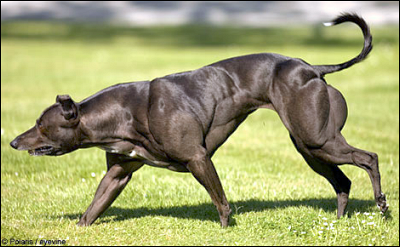 |
| World Strongest Dog |
 |
| World Strongest Dog |
 |
| World Strongest Dog |
 |
| The World Most Ugliest Dog |
 |
| The World Most Ugliest Dog |
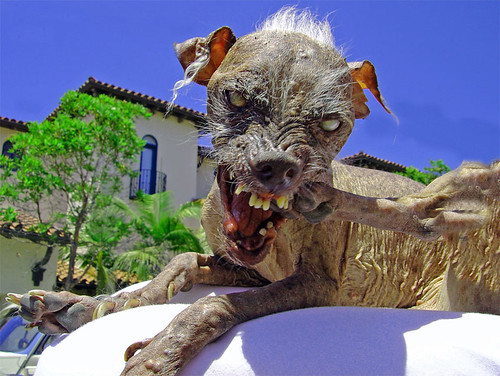 |
| The World Most Ugliest Dog |
 |
| The World Most Ugliest Dog |
 |
| The World Most Ugliest Dog |
 |
| The World Most Ugliest Dog |
 |
| Cute Dogs And Puppies |
 |
| Cute Dogs And Puppies |
 |
| Cute Dogs And Puppies |
 |
| Cute Dogs And Puppies |
 |
| Cute Dogs And Puppies |
 |
| Cute Dogs And Puppies |
 |
| Beutiful Dogs Images |
 |
| Beutiful Dogs Images |
 |
| Beutiful Dogs Images |
 |
| Beutiful Dogs Images |
 |
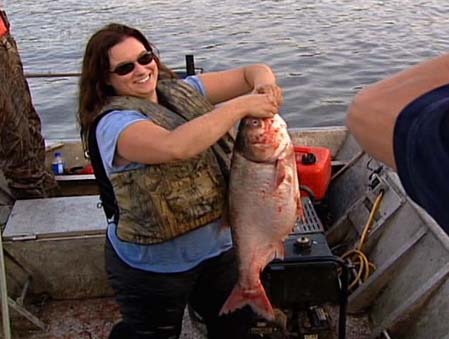
| Asian Carp |
 |
| The Great Lakes. Courtesy of the University of Michigan. |
 |
| Asian Carp Fish |
 |
| Asian Carp |
 |
| Asian Carp |
 | ||
| Asian Carp Next Page |
 |