Showing posts with label Famous Personalities. Show all posts

Friday, April 15, 2011

Charlie Chaplin Biography

 Overview of His Life

Childhood

Charles Spencer Chaplin was born in London, England, on April 16th 1889. His father was a versatile vocalist and actor; and his mother, known under the stage name of Lily Harley, was an attractive actress and singer, who gained a reputation for her work in the light opera field.
Charlie was thrown on his own resources before he reached the age of ten as the early death of his father and the subsequent illness of his mother made it necessary for Charlie and his brother, Sydney, to fend for themselves.
Having inherited natural talents from their parents, the youngsters took to the stage as the best opportunity for a career. Charlie made his professional debut as a member of a juvenile group called "The Eight Lancashire Lads" and rapidly won popular favour as an outstanding tap dancer.

Beginning of his career

When he was about fourteen, he got his first chance to act in a legitimate stage show, and appeared as "Billy" the page boy, in support of William Gillette in "Sherlock Holmes". At the close of this engagement, Charlie started a career as a comedian in vaudeville, which eventually took him to the United States in 1910 as a featured player with the Fred Karno Repertoire Company.
He scored an immediate hit with American audiences, particularly with his characterization in a sketch entitled "A Night in an English Music Hall". When the Fred Karno troupe returned to the United States in the fall of 1912 for a repeat tour, Chaplin was offered a motion picture contract.
He finally agreed to appear before the cameras at the expiration of his vaudeville commitments in November 1913; and his entrance in the cinema world took place that month when he joined Mack Sennett and the Keystone Film Company. His initial salary was $150 a week, but his overnight success on the screen spurred other producers to start negotiations for his services.
At the completion of his Sennett contract, Chaplin moved on to the Essanay Company (1915) at a large increase. Sydney Chaplin had then arrived from England, and took his brother’s place with Keystone as their leading comedian.The following year Charlie was even more in demand and signed with the Mutual Film Corporation for a much larger sum to make 12 two-reel comedies. These include "The Floorwalker", "The Fireman", "The Vagabond", "One A.M." (a production in which he was the only character for the entire two reels with the exception of the entrance of a cab driver in the opening scene), "The Count", "The Pawnshop", "Behind the Screen", "The Rink", "Easy Street" (heralded as his greatest production up to that time), "The Cure", "The Immigrant" and "The Adventurer".

Gaining independence
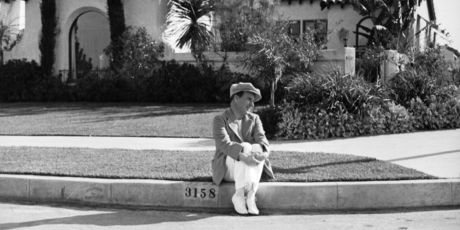
When his contract with Mutual expired in 1917, Chaplin decided to become an independent producer in a desire for more freedom and greater leisure in making his movies. To that end, he busied himself with the construction of his own studios. This plant was situated in the heart of the residential section of Hollywood at La Brea Avenue.
Early in 1918, Chaplin entered into an agreement with First National Exhibitors’ Circuit, a new organization specially formed to exploit his pictures. His first film under this new deal was "A Dog’s Life". After this production, he turned his attention to a national tour on behalf of the war effort, following which he made a film the US government used to popularize the Liberty Loan drive: "The Bond".
His next commercial venture was the production of a comedy dealing with the war. "Shoulder Arms", released in 1918 at a most opportune time, proved a veritable mirthquake at the box office and added enormously to Chaplin’s popularity. This he followed with "Sunnyside" and "A Day’s Pleasure", both released in 1919.
In April of that year, Chaplin joined with Mary Pickford, Douglas Fairbanks and D.W. Griffith to found the United Artists Corporation. B.B. Hampton, in his "History of the Movies" says:
"The corporation was organized as a distributor, each of the artists retaining entire control of his or her respective producing activities, delivering to United Artists the completed pictures for distribution on the same general plan they would have followed with a distributing organization which they did not own. The stock of United Artists was divided equally among the founders. This arrangement introduced a new method into the industry. Heretofore, producers and distributors had been the employers, paying salaries and sometimes a share of the profits to the stars. Under the United Artists system, the stars became their own employers. They had to do their own financing, but they received the producer profits that had formerly gone to their employers and each received his share of the profits of the distributing organization."
owever, before he could assume his responsibilities with United Artists, Chaplin had to complete his contract with First National

Tuesday, April 12, 2011

Yuri Gagarin

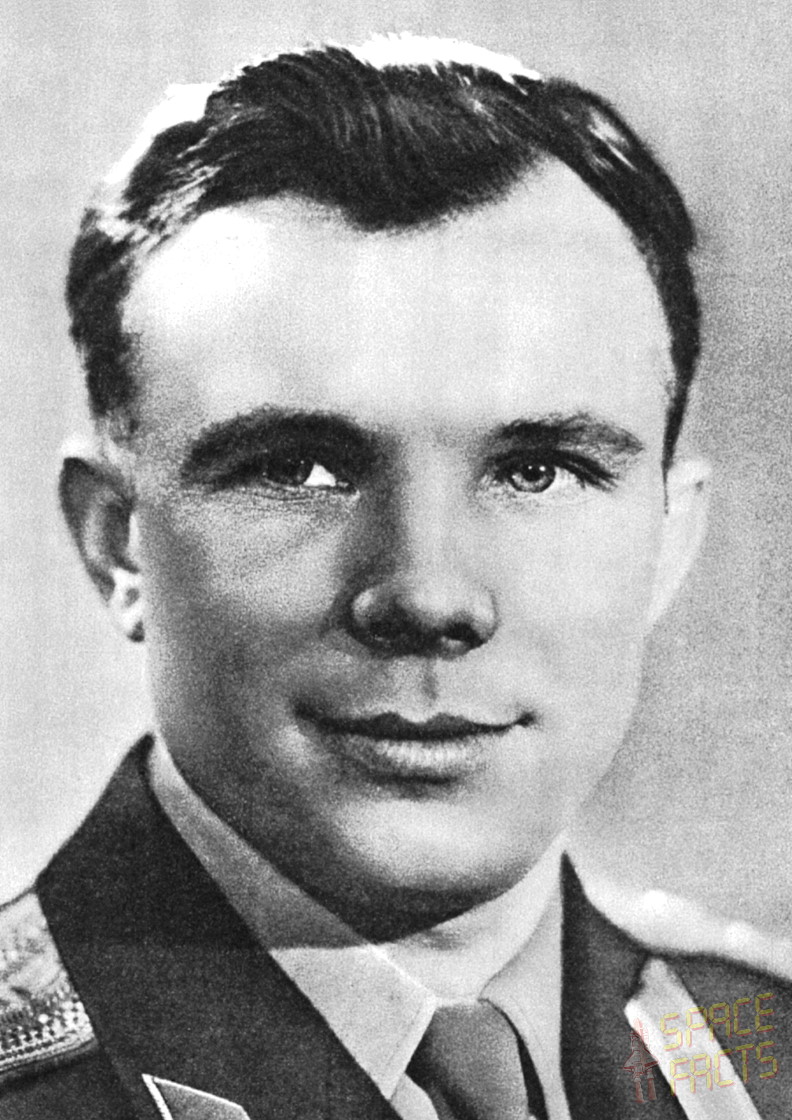
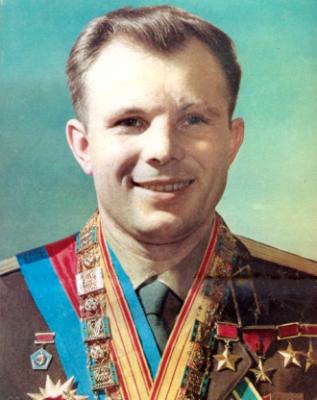
Yuri Alekseyevich Gagarin, (Russian: Ю́рий Алексе́евич Гага́рин, Jurij Aleksejevič Gagarin IPA [ˈjurʲɨj əlʲɪkˈsʲejɪvʲɨtʂ gəˈgarʲɨn]; 9 March 1934 – 27 March 1968), Hero of the Soviet Union, was a Soviet cosmonaut. On 12 April 1961, he became the first person in space and the first to orbit the Earth. He received many medals from different countries for his pioneering tour in space.

Early life

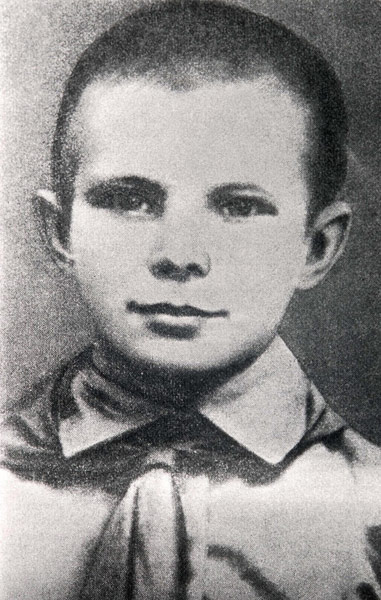
Yuri Gagarin was born in the village of Klushino near Gzhatsk (now in Smolensk Oblast, Russia), on 9 March 1934. The adjacent town of Gzhatsk was renamed Gagarin in 1968 in his honour. His parents, father Alexei Ivanovich Gagarin and mother Anna Timofeevna Gagarina, worked on a collective farm. While manual laborers are described in official reports as "peasants", this may be an oversimplification if applied to his parents — his mother was reportedly an edacious reader, and his father a skilled carpenter. Yuri was the third of four children, and his elder sister helped raise him while his parents worked. Like millions of people in the Soviet Union, the Gagarin family suffered great hardship in World War II. His two elder siblings were "taken away" to Germany as slave laborers in 1943, and did not return until after the war. While a youth, Yuri became interested in space and planets, and began to dream about his space tour which became true one day. Yuri was described by his teachers in the Moscow satellite town of Lyubertsy as intelligent and hard-working, if occasionally mischievous. His mathematics and science teacher had flown in the Soviet Air Forces during the war, which presumably made some substantial impression on young Gagarin.
After starting an apprenticeship in a metalworks as a foundryman, Gagarin was selected for further training at a technical high school in Saratov. While there, he joined the "AeroClub", and learned to fly a light aircraft, a hobby that would take up an increasing proportion of his time. Through dint of effort, rather than brilliance, he reportedly mastered both; in 1955, after completing his technical schooling, he entered military flight training at the Orenburg Pilot's School. While there he met Valentina Goryacheva, whom he married in 1957, after gaining his pilot's wings in a MiG-15. Post-graduation, he was assigned to Luostari airbase in Murmansk Oblast, close to the Norwegian border, where terrible weather made flying risky. As a full-grown man, Gagarin was 5 ft 2 in (1.57 m) tall, which was an advantage in the small Vostok cockpit.

Career in the Soviet space program


Selection and training

In 1960, after an extensive search and selection process Yuri Gagarin was selected with 19 other cosmonauts for the Soviet space program. Along with the other prospective cosmonauts, he was subjected to a rigorous series of experiments designed to test his physical and psychological endurance; he also underwent intensive training for the upcoming flight. Out of the twenty selected, the eventual choices for the first launch were Gagarin and Gherman Titov because of their excellent performance in training, as well as their physical characteristics — space was at a premium in the small Vostok cockpit and both men were rather short. Gagarin's last-minute assignment, approved at the highest levels of the CPSU, to take the historic flight, may have been due to Gagarin's modest upbringing and genial, outgoing personality, as opposed to the middle-class and somewhat aloof demeanor of Titov. Soviet officials weighed other factors as well in selecting Yuri: his appearance, his capacity to handle media attention, his Russian heritage and even the name " Gagarin," which was also a family name associated with Tsarist aristocracy.

Space flight

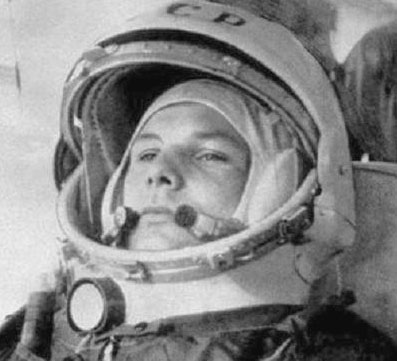
Yuri Gagarin in space suit.
On 12 April 1961, Gagarin became the first human to travel into space in Vostok 3KA-2 ( Vostok 1). His call sign in this flight was Kedr ( Cedar) (Russian: Кедр). During his flight, Gagarin famously whistled the tune "The Motherland Hears, The Motherland Knows" (Russian: "Родина слышит, Родина знает"). The first two lines of the song are: "The Motherland hears, the Motherland knows/Where her son flies in the sky". This patriotic song was written by Dmitri Shostakovich in 1951 (opus 86), with words by Yevgeniy Dolmatovsky.
There are speculations in the media that from orbit Gagarin made the comment, "I don't see any God up here." There are, however, no such words in the full verbatim record of Gagarin's conversations with the Earth during the spaceflight. In a 2006 interview a close friend of Gagarin, Colonel Valentin Petrov, stated that Gagarin never said such words, and that the phrase originated from Nikita Khrushchev's speech at the plenum of the Central Committee of the CPSU, where the antireligious propaganda was discussed. In a certain context Khrushchev said, "Gagarin flew into space, but didn't see any God there". As Gagarin was a great people's favorite at the time, Khrushchev's words were soon attributed to Gagarin for them to be more effective.
While in orbit Gagarin was promoted "in the field" from the rank of Senior Lieutenant to Major — and this was the rank at which TASS announced him in its triumphant statement during the flight.
Gagarin being safely returned, Nikita Khrushchev rushed to his side and Gagarin issued a statement praising the Communist Party of the Soviet Union as the "organizer of all our victories". Khrushchev saw Gagarin's achievement as a vindication of his policy of strengthening the Soviet Union's missile forces at the expense of conventional arms. This policy antagonized the Soviet military establishment and contributed to Khrushchev's eventual downfall.
After the flight, Gagarin became an instant, worldwide celebrity, touring widely with appearances in Italy, Great Britain, Germany, Canada, and Japan to promote the Soviet achievement.
In 1962, he began serving as a deputy to the Supreme Soviet. He later returned to " Star City", the cosmonaut facility, where he worked on designs for a reusable spacecraft. Gagarin worked on these designs in Star City for 7 years.

Death and legacy

40-meter monument to Yuri Gagarin in Moscow, made of titanium.
Gagarin then became deputy training director of Star City. At the same time, he began to requalify as a fighter pilot. On 27 March 1968, he and his instructor died in a MiG-15UTI on a routine training flight near Kirzhach. It is not certain what caused the crash, but a 1986 inquest suggests that the turbulence from a Su-11 'Fishpot-C' interceptor using its afterburners may have caused Gagarin's plane to go out of control. Weather conditions were also poor, which may have contributed to the inability of Gagarin and the instructor to correct before they crashed.
In his book, Two Sides of the Moon, Alexei Leonov recounts that he was flying a helicopter in the same area that day when he heard "two loud booms in the distance." Corroborating the above hypothesis, his conclusion is that a Sukhoi jet (which he identifies as a Su-15 'Flagon'), flying below its minimum allowed altitude, "without realizing it because of the terrible weather conditions, passed within 10 or 20 meters of Yuri and Seregin's plane while breaking the sound barrier." The resulting turbulence would have sent the MiG into an uncontrolled spin. Leonov believes the first boom he heard was that of the jet breaking the sound barrier, and the second was Gagarin's plane crashing.
Memorial at the location of the crash that killed Gagarin and Seregin
A new theory, advanced by the original crash investigator in 2005, hypothesises that a cabin vent was accidentally left open by the crew or the previous pilot, thus leading to oxygen deprivation and leaving the crew incapable of controlling the aircraft.
There were two commemorative coins issued in the Soviet Union to commemorate 20th and 30th anniversaries of his flight: 1 ruble coin (1981, copper-nickel) and 3 ruble coin (1991, silver). In 2001, to commemorate the 40th anniversary of Gagarin's flight, a series of four coins bearing his likeness was issued in Russia: 2 ruble coin (copper-nickel), 3 ruble coin (silver), 10 ruble coin (brass-copper, nickel), 100 ruble coin (silver).
Gagarin is buried next to Seregin in the walls of the Kremlin on Red Square.
On 12 April 2007, the Kremlin vetoed a new investigation into the death of Gagarin. Some experts who had been involved in the original investigation had formulated a new theory, based on modern technology and investigative methods. Government officials said that they saw no reason to begin a new investigation. All found parts of the MiG-15UTI which crashed are stored in the weld barrels. They may help in the future to unveil the mystery of the crash.

Yuri Gagarin Images

Yuri Gagarin
Yuri Gagarin
Yuri Gagarin
Yuri Gagarin
Yuri Gagarin
Yuri Gagarin
Yuri Gagarin
Yuri Gagarin

Friday, April 8, 2011

Hillary Clinton College life

Hillary Clinton College life

Future-First Lady and Senator-Hillary Rodham While-at Wellesley College Posters
In 1965, Rodham enrolled at Wellesley College, where she majored in political science.During her freshman year, she served as president of the Wellesley Young Republicans; with this Rockefeller Republican-oriented group, she supported the elections of John Lindsay and Edward Brooke. She later stepped down from this position, as her views changed regarding the American Civil Rights Movement and the Vietnam War. In a letter to her youth minister at this time, she described herself as "a mind conservative and a heart liberal." In contrast to the 1960s current that advocated radical actions against the political system, she sought to work for change within it. In her junior year, Rodham became a supporter of the antiwar presidential nomination campaign of Democrat Eugene McCarthy.Following the assassination of Martin Luther King, Jr., Rodham organized a two-day student strike and worked with Wellesley's black students to recruit more black students and faculty. In early 1968, she was elected president of the Wellesley College Government Association and served through early 1969; she was instrumental in keeping Wellesley from being embroiled in the student disruptions common to other colleges.A number of her fellow students thought she might some day become the first woman President of the United States. So she could better understand her changing political views, Professor Alan Schechter assigned Rodham to intern at the House Republican Conference, and she attended the "Wellesley in Washington" summer program. Rodham was invited by moderate New York Republican Representative Charles Goodell to help Governor Nelson Rockefeller’s late-entry campaign for the Republican nomination. Rodham attended the 1968 Republican National Convention in Miami. However, she was upset by how Richard Nixon's campaign portrayed Rockefeller and by what she perceived as the convention's "veiled" racist messages, and left the Republican Party for good.
Returning to Wellesley for her final year, Rodham wrote her senior thesis about the tactics of radical community organizer Saul Alinsky under Professor Schechter (years later while she was First Lady, access to the thesis was restricted at the request of the White House and it became the subject of some speculation). In 1969, she graduated with a Bachelor of Arts,with departmental honors in political science. Following pressure from some fellow students, she became the first student in Wellesley College history to deliver its commencement address. Her speech received a standing ovation lasting seven minutes. She was featured in an article published in Life magazine,due to the response to a part of her speech that criticized Senator Edward Brooke, who had spoken before her at the commencement.She also appeared on Irv Kupcinet's nationally syndicated television talk show as well as in Illinois and New England newspapers. That summer, she worked her way across Alaska, washing dishes in Mount McKinley National Park and sliming salmon in a fish processing cannery in Valdez (which fired her and shut down overnight when she complained about unhealthy conditions).

Law school

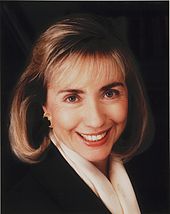
Hillary Rodham Clinton, 1992
Rodham then entered Yale Law School, where she served on the editorial board of the Yale Review of Law and Social Action.During her second year, she worked at the Yale Child Study Center, learning about new research on early childhood brain development and working as a research assistant on the seminal work, Beyond the Best Interests of the Child (1973). She also took on cases of child abuse at Yale-New Haven Hospitaland volunteered at New Haven Legal Services to provide free legal advice for the poor.In the summer of 1970, she was awarded a grant to work at Marian Wright Edelman's Washington Research Project, where she was assigned to Senator Walter Mondale's Subcommittee on Migratory Labor. There she researched migrant workers' problems in housing, sanitation, health and education. Edelman later became a significant mentor. She was recruited by political advisor Anne Wexler to work on the 1970 campaign of Connecticut U.S. Senate candidate Joseph Duffey, with Rodham later crediting Wexler with providing her first job in politics.
In the late spring of 1971, she began dating Bill Clinton, also a law student at Yale. That summer, she interned at the Oakland, California, law firm of Treuhaft, Walker and Burnstein. The firm was well-known for its support of constitutional rights, civil liberties, and radical causes (two of its four partners were current or former Communist Party members);Rodham worked on child custody and other cases. Clinton canceled his original summer plans, in order to live with her in California;the couple continued living together in New Haven when they returned to law school.The following summer, Rodham and Clinton campaigned in Texas for unsuccessful

1972 Democratic presidential candidate George McGovern. She received a Juris Doctor degree from Yale in 1973, having stayed on an extra year to be with Clinton.Clinton first proposed marriage to her following graduation, but she declined.She began a year of postgraduate study on children and medicine at the Yale Child Study Center.Her first scholarly article, "Children Under the Law", was published in the Harvard Educational Review in late 1973. Discussing the new children's rights movement, it stated that "child citizens" were "powerless individuals"[ and argued that children should not be considered equally incompetent from birth to attaining legal age, but that instead courts should presume competence except when there is evidence otherwise, on a case-by-case basis.The article became frequently cited in the field.
Saturday, April 2, 2011

Arthur Shimkin

Arthur Shimkin (1922-2006) was a record producer. The former head of '50s pop label Bell Records, Shimkin worked on many Sesame Street albums in the '70s and '80s, first as project supervisor, and later as producer.
In all, the 3,000 records to his credit sold more than 5 million copies.He was nominated for 13 Grammys.
At Simon & Schuster, he conceived Little Golden Records, storybooks read on two-sided 45 r.p.m. records. Predecessors to audiobooks on tapes and CDs, they starred Bing Crosby, Alfred Hitchcock, Roy Rogers, Burl Ives, and Johnny Cash.
He died in his Manhattan home on December 4, 2006, at the age of 84.

Wednesday, March 30, 2011

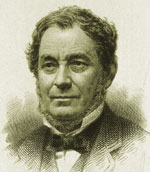
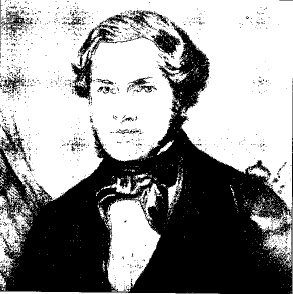
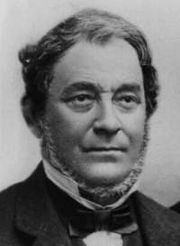
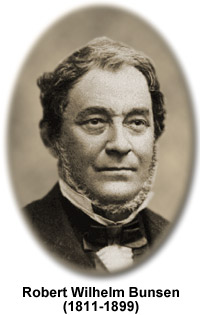
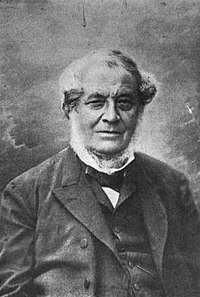
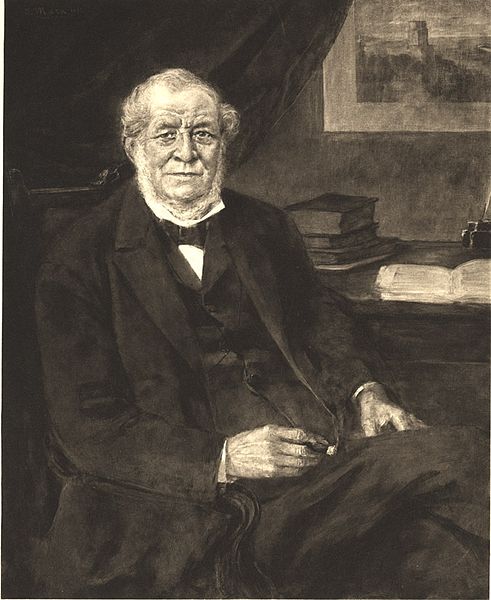
Pictures Of Robert Bunsen


Robert Bunsen Biography

When confronted by the vast array of apparatus used in chemistry lab, a student can usually identify with a high degree of confidence one of the more familiar pieces of equipment, the Bunsen burner. While this essential piece of laboratory equipment has immortalized the name of Robert Wilhelm Bunsen, it was not invented by him. Bunsen improved the burner's design to aid his endeavors in spectroscopy. Ironically, Bunsen will be remembered by generations of chemistry students for a mere improvement in a burner design, when his other contributions to the field of chemistry are vastly more significant and diverse, covering such areas as organic chemistry, arsenic compounds, gas measurements and analysis, the galvanic battery, elemental spectroscopy and geology.
Bunsen was born on March 31, 1811 in Göttingen, Germany, the youngest of four sons. As his father was a professor of modern languages at the university, an academic environment would surround him from birth. After schooling in the city of Holzminden, Bunsen studied chemistry at Göttingen. Receiving his doctorate at age 19, Bunsen set off on extensive travels, partially underwritten by the government, that took him through Germany and Paris and eventually to Vienna from 1830 to 1833. During this time, Bunsen visited Henschel's machinery manufacturing plant and saw the "new small steam engine." In Berlin, he saw the mineralogical collections of Weiss and had contact with Runge, the discoverer of aniline. Continuing on his journeys, Bunsen met with Liebig in Giessen and with Mitscherlich in Bonn for a geological trip through the Eifel mountains. In Paris and Vienna, Bunsen visited the Sevres porcelain works and met with the outstanding chemists of the times. These travels allowed Bunsen the opportunity to establish a network of contacts that would stay with him throughout his illustrious career.
Upon his return to Germany, Bunsen became a lecturer at Göttingen and began his experimental studies of the insolubility of metal salts of arsenious acid. His discovery of the use of iron oxide hydrate as a precipitating agent is still the best known antidote against arsenic poisoning to this day. This was his only venture in organic/physiological chemistry.
In 1836, Bunsen was nominated to succeed Wöhler at Kassel. He taught there for two years before accepting a position at the University of Marsburg which was the site of his important and dangerous studies of cacodyl derivatives. This research was his only work in pure organic chemistry and made him immediately famous within the scientific community. Cacodyl (from the Greek kakodhs - "stinking") was also known as alkarsine or "Cadet's liquid," a product made from arsenic distilled with potassium acetate. The chemical composition of this liquid was unknown, but it and its compounds were known to be poisonous, highly flammable and had an extremely nauseating odor even in minute quantities. Bunsen himself described one of these compounds: "the smell of this body produces instantaneous tingling of the hands and feet, and even giddiness and insensibility...It is remarkable that when one is exposed to the smell of these compounds the tongue becomes covered with a black coating, even when no further evil effects are noticeable."(1) Bunsen's daring experiments showed that cacodyl was an oxide of arsenic that contained a methyl radical (a group of atoms acting as one species). These results significantly furthered the earlier work by Gay-Lussac, who had isolated the radical cyan in 1815, and that of Liebig and Wöhler who published "One the radical of benzoic acid" in 1832. Typical of his research life, however, Bunsen seemed content to explore subjects of interest in his lab, but remained outside the fray that surrounded the often "violent" discussions of theoretical subjects. Although Bunsen's work brought him quick and wide acclaim, he nearly killed himself from arsenic poisoning and it also cost him the sight of one eye - an explosion of the compound sent a sliver of glass into his eye. Recovery was slow and painful.
While at Marsburg, Bunsen studied blast furnaces and demonstrated that over half the heat was lost in the charcoal-burning German furnaces. In British furnaces, over 80% was lost. Bunsen and a collaborator, Lyon Playfair, suggested techniques that could recycle gases through the furnace and retrieve valuable escaping by-products such as ammonia. Other work during this period concentrated on technological experiments such as the generation of galvanic currents in batteries. In 1841, instead of the expensive platinum electrode used in Grove's battery, Bunsen made a carbon electrode. This led to large scale use of the "Bunsen battery" in the production of arc-light and in electroplating.
One of the more memorable episodes during Bunsen's tenure at Marsburg was a geological trip to Iceland sponsored by the Danish government following the eruption of Mount Hekla in 1845. Indulging his lifelong interest in geology, Bunsen collected gases emitted from volcanic vents and performed extensive chemical analyses of volcanic rock. In addition to sampling lava gases, Bunsen investigated the theory of geyser action. The popular belief of his time was that the water from geysers was volcanic in origin. Bunsen took rocks from the area and boiled them in rain water. He found that the resulting solution was quite similar to geyser water. He conducted temperature studies on the water in the geyser tube at different depths and discovered that the water was indeed hot enough to boil. Due to pressure differentials caused by the moving column of water, boiling occurs in the middle of the tube and throws the mass of water above it into the sky above. In true investigative spirit Bunsen experimented with an artificial geyser in the lab:
"To confirm his theory, Bunsen made an artificial geyser, consisting of a basin of water having a long tube extending below it. He heated the tube at the bottom andat about the middlepoint. As the water at the middle reached its boiling point, all of the phenomena of geyser action were beautifully shown, including the preliminary thundering. That was in 1846. From that day to this Bunsen's theory of geyser action has been generally accepted by geologists."(2)
In 1852 Bunsen succeeded Leopold Gmelin at Heidelberg. His stature was such that he attracted students and chemists from all over the world to study in his laboratory. Again, Bunsen ignored the current trend in organic chemistry which was fast overtaking the experimental world. Instead, Bunsen improved his earlier work on batteries: using chromic acid instead of nitric acid, he was able to produce pure metals such as chromium, magnesium, aluminum, manganese, sodium, aluminum, barium, calcium and lithium by electrolysis. Bunsen devised a sensitive ice calorimeter that measured the volume rather than the mass of the ice melted. This allowed him to measure the metals' specific heat to find their true atomic weights. During this period, he also pressed magnesium into wire; the element came into general use as an outstanding illuminating agent.A former student of Bunsen's believes that it was this "splendid light" from the combustion of magnesium that led Bunsen to devote considerable attention to photochemical studies. A ten year collaboration with Sir Henry Roscoe began in 1852. They took equal volumes of gaseous hydrogen and chlorine and studied the formation of HCl, which occurs in specific relationship to the amount of light received. Their results showed that the light radiated from the sun per minute was equivalent to the chemical energy of 25 x 1012 mi3 of a hydrogen-chlorine mixture forming HCl.
In 1859, Bunsen suddenly discontinued his work with Roscoe, telling him:
At present Kirchhoff and I are engaged in a common work which doesn't let us sleep...Kirchhoff has made a wonderful, entirely unexpected discovery in finding the cause of the dark lines in the solar spectrum....thus a means has been found to determine the composition of the sun and fixed stars with the same accuracy as we determine sulfuric acid, chlorine, etc., with our chemical reagents. Substances on the earth can be determined by this method just as easily as on the sun, so that, for example, I have been able to detect lithium in twenty grams of sea water."(3)

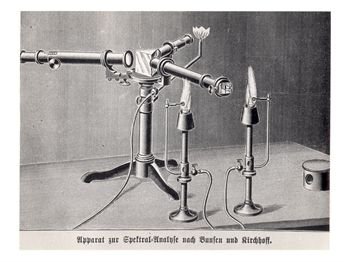
Gustav Kirchhoff, a young Prussian physicist, had the brilliant insight to use a prism to separate the light into its constituent rays, instead of looking through colored glass to distinguish between similarly colored flames. Thus the fledgling science of spectroscopy, which would develop into a vital tool for chemical analysis, was born.In order to study the resultant spectra, however, a high temperature, nonluminous flame was necessary. An article published by Bunsen and Kirchhoff in 1860 states:
"The lines show up the more distinctly the higher the temperature and the lower the luminescence of the flame itself. The gas burner described by one of us has a flame of very high temperature and little luminescence and is, therefore, particularly suitable for experiments on the bright lines that are characteristic for these substances."(4)
The burner described was quickly dubbed the "Bunsen burner," although the apparatus is not of his design. The concept to premix the gas and air prior to combustion in order to yield the necessary high temperature, nonluminous flame belongs to Bunsen. Credit for the actual design and manufacture of the burner goes to Peter Desaga, a technician at the University of Heidelburg. (5)Within five years of the development of the burner, Bunsen and Kirchhoff were deeply involved with spectroscopy, inventing yet another instrument: the Bunsen-Kirchhoff spectroscope. This vital instrument of chemical analysis can trace its ancestry to such simple components as a "prism, a cigar box, and two ends of otherwise unusable old telescopes."(6) From such humble beginnings came the instrument which proved to be of tremendous importance in chemical analysis and the discovery of new elements.
In addition to yielding a unique spectrum for each element, the spectroscope had the advantage of definite identification while only using a minimal amount of sample, on the range of nanograms to micrograms for elements like sodium and barium respectively. Using the techniques they devised, Bunsen and Kirchhoff announced the discovery of cesium (Latin caesium, "sky blue") in the following passage:
"Supported by unambiguous results of the spectral-analytical method, we believe we can state right now that there is a fourth metal in the alkali group besides potassium, sodium, and lithium, and it has a simple characteristic spectrum like lithium; a metal that shows only two lines in our apparatus: a faint blue one, almost coinciding with Srd, and another blue one a little further to the violet end of the spectrum and as strong and as clearly defined as the lithium line."(7)
Some of Bunsen's enthusiasm is readily apparent in a letter to Roscoe dated November 6, 1869:
"I have been very fortunate with my new metal...I shall name it cesium because of its beautiful blue spectral line. Next Sunday I expect to find time to make the first determination of its atomic weight." (8)
In 1861, only a few months following their cesium discovery, Bunsen and Kirchhoff announced the discovery of yet another new alkali metal. Two hitherto undiscovered violet spectral lines in an alkali of the mineral lepidolite were attributed to a new element, rubidium (Latin rubidus, "darkest red colour").Bunsen and Kirchhoff's combined genius quickly paved the way for others to claim elemental discoveries. The spectroscope served as a springboard by which five new elements were discovered. These included thallium (Crookes, 1861), indium (Reich and Richter, 1863), gallium (Lecoq de Boisbaudran, 1875), scandium (Nilson, 1879) and germanium (Winkler, 1886).(9) Fittingly, Bunsen's original vision of analyzing the composition of the stars was realized in 1868 when helium was discovered in the solar spectrum.
Throughout his professional life, Bunsen's personal life centered around his laboratory and his students. Never marrying, Bunsen often took on the introductory courses that were shunned by other colleagues. During the one hundred hours of lectures presented each semester, Bunsen emphasized experimentation and tabulated summaries and patiently introduced students to the world of analytical chemistry. Bunsen's habit was to assign a scientific task to his students and then to work with a student only as long as required to reach some measure of independence. Many principal players in the history of chemistry can trace their chemical roots back to Bunsen's laboratory. Two of his more famous students were Dmitri Mendeleev and Lothar Meyer.
According to accounts, Bunsen was one of the more modest of giants:
"He never said: 'I have discovered,' or 'I found'...He was characterized by extraordinary, distinguished modesty. That does not mean that he was not conscious of his own value. He knew how to use it at the right time and in the right company; he even had a considerable degree of very sound egotism." (10)

The scientific world held Bunsen in high esteem for much of his long professional life. In 1842 he was elected to the Chemical Society of London and the Academie des Sciences in 1853. He was named a foreign fellow of the Royal Society of London in 1858, receiving its Copley Medal in 1860. Bunsen and Kirchhoff were recipients of the first Davy Medal in 1877. The Albert Medal was awarded in 1898 in recognition of Bunsen's many scientific contributions to industry. Of these honors, Bunsen once remarked, "Such things had value for me only because they pleased my mother; she is now dead." (11)Upon his retirement at the age of 78, Bunsen left the chemical work behind, returned to his first love of geology, keeping up with the latest developments in the field and corresponding with his old friends such as Roscoe, Kirchhoff and Helmholtz. Bunsen died August 16, 1899 after a peaceful three day sleep, leaving behind a glowing legacy of discoveries and technological advances that allowed the world of chemistry to burn brightly.

Footnotes

1. Davenport, Derek, "Robert Bunsen...more than a burner design," ChemMatters1984, 2, p. 14.2. Darrow, Floyd, Masters of Science and Invention , Harcourt, Brace and Company, Inc., New York, 1923, p.212.
3. Weeks, Mary E. and Leicester, Henry M. (revised), "Some Spectroscopic Discoveries," Discovery of the Elements, Journal of Chemical Education, Pennsylvania, 1968, p.598.
4. "Bunsen's Methodological Legacy", in Eduard Farber, ed., Milestones of Modern Chemistry, Basic Books, Inc., New York, 1966, p.19.
5. Lockemann, Georg, "The Centenary of the Bunsen Burner", Journal of Chemical Education1956, 33, 201.
6. Curtis, Theodor, "Robert Bunsen," in Eduard Farber, ed., Great Chemists, Interscience Publishers, New York, 1961, p. 579.
7. Farber, 1966, p. 24.
8. Weeks, p. 599
9. Schacher, Susan G., "Robert Bunsen," in C.C. Gillispie, ed., Dictionary of Scientific Biography, Charles Scribner's Sons, USA, 1972, p.589.
10. Curtis, p. 580.
11. Weeks, p. 605

Robert Bunsen Images

Robert Bunsen's 200th BirthDay Anniversary


The 31st of March 2011 marks the 200th anniversary of the birth of Robert Bunsen (1811-1899). Bunsen was a German chemist perhaps most famous for his invention of the Bunsen Burner; this was actually the latest in a series of improvements to the laboratory burners already in use but proved to be the most effective and came to make his name familiar to every young student of the chemical sciences.
Robert Bunsen was one of the most influential chemistry teachers of his time, teaching at the Universities in Marburg, Breslau & Heidelberg as well as the Polytechnic School of Kassel.  Some of his more notable students included Henry Roscoe, Friedrich Beilstein, John Tyndall, Edward Frankland and Dmitri Mendeleev (creator of the Periodic Table).
With Gustav Kirchhoff, Robert Bunsen pioneered the use of spectroscopy in chemical analysis; Spectroscopy is the study of the interaction between matter and radiated energy, i.e. when an element is heated, it emits energy in the form of light, this light can then be examined with a spectroscope to determine its unique spectra.  Kirchhoff and Bunsen used this process to eventually discover Caesium and Rubidium.
Bunsen, Kirchhoff & Roscoe (1862)
The RSC archive holds many items written by and about Robert Bunsen.  These include the handwritten 'Photochemical Researches' (c. 1851) conducted by him and Sir Henry Roscoe as well as 'Roscoe's Lectures on Bunsen's and Kirchhoff's Spectrum Observations' (1861) and letters written by Bunsen to Roscoe.
Roscoe and Bunsen were to become lifelong friends as well as collaborators in research, Roscoe said of Bunsen:
'As an investigator he was great, as a teacher he was greater, as a man and friend he was greatest'
Bunsen never married and devoted most of his time to his research and his teaching.  It is clear that he was extremely popular and well-liked by both his contemporaries and his students.  After meeting Bunsen for the first time, Agnes Fischer, the wife of Emil Fischer (another notable German chemist) said,
'First, I would like to wash Bunsen, and then I would like to kiss him because he is such a charming man'
Further Reading
Bunsen, R. 1859, On the Chemical Theory of Gunpowder, Royal Artillery Institution, London (RSC Item ID: HC1855)
Partington, J.R. 1957, Short History of Chemistry, Macmillan & Co., London (RSC Item ID: 24011)
Roscoe, H.E. 1900, 'Bunsen Memorial Lecture', Journal of the Chemical Society, Transactions, vol. 77, pp. 513-554 (See journal link below)
Roscoe, H.E. 1900, Bunsen: A Discourse (delivered at the Royal Institution Friday June 1, 1900, Royal Institution, London (RSC Item ID: HC3389)
Roscoe, H.E. 1906, The Life and Experiences of Sir Henry Enfield Roscoe,Macmillan, London (RSC Item ID: 100068)

Robert Bunsen and Gustav Kirchoff

Robert Bunsen (centrum),
  Gustav Kirchhoff (odešel) a
Sir Henry Roscoe (pravý) u
Manchester univerzita v 1862
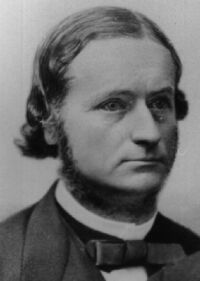
Gustav Kirchhoff (left) and Robert Bunsen (right)
Kirchoff (left) and Bunsen. Reproduced courtesy of the Library and Information Centre, The Royal Society of Chemistry.

Robert Bunsen and Gustav Kirchoff

In 1861 Bunsen and Kirchoff jointly discovered caesium (which gave a blue flame) and rubidium (which gave a red flame). Bunsen (who devised, or at least developed, the Bunsen burner) discovered only two elements himself, along with Kirchoff, but his technique was used to discover several more.

Robert Bunsen

Paul Emile Lecoq de Boisbaudran (1838 - 1912) used flame colours (called emission spectra) to search for more elements. He discovered gallium (1875), samarium and dysprosium. Gallium was the first element to be found whose properties matched elements predicted in detail by Mendeleev in 1870, dramatic proof of his ideas about the Periodic Table.

Robert Bunsen Life,Biography,Personality and Achiements


Robert Wilhelm Bunsen

Robert Wilhelm Eberhard Bunsen (30 March 1811 – 16 August 1899) was aGerman chemist. He investigated emission spectra of heated elements, and withGustav Kirchhoff discovered caesium (in 1860) and rubidium (in 1861). Bunsen developed several gas-analytical methods, was a pioneer in photochemistry, and did early work in the field of organoarsenic chemistry. With his laboratory assistant, Peter Desaga, he developed the Bunsen burner, an improvement on the laboratory burners then in use. The Bunsen–Kirchhoff Award for spectroscopy is named after Bunsen and Kirchhoff. The Robert Wilhelm Bunsen Medal is assigned every year by the European Geosciences Union (www.egu.eu) to scientists who provided significant advance in the fields of Geochemistry, Mineralogy, Petrology, and Volcanology.
Bunsen was born in Göttingen, Germany, the youngest of four sons of theUniversity of Göttingen's chief librarian and professor of modern philology, Christian Bunsen (1770–1837). After attending school in Holzminden, in 1828 Bunsen matriculated at Göttingen and studied chemistry with Friedrich Stromeyer, obtaining the Ph.D. degree in 1831. In 1832 and 1833 he traveled in Germany, France, and Austria, where he met Friedrich Runge (who discoveredaniline and in 1819 isolated caffeine), Justus von Liebig in Gießen, and Eilhard Mitscherlich in Bonn.

University teacher

In 1833, Bunsen became a lecturer at Göttingen and began experimental studies of the (in)solubility of metal salts of arsenous acid. Today, his discovery of the use of iron oxide hydrate as a precipitating agent is still the best-knownantidote against arsenic poisoning. In 1836, Bunsen succeeded Friedrich Wöhler at the Polytechnic School of Kassel. Bunsen taught there for three years, and then accepted an associate professorship at theUniversity of Marburg, where he continued his studies on cacodyl derivatives. He was promoted to full professorship in 1841. Bunsen's work brought him quick and wide acclaim, partly because cacodyl, which is extremely toxic and undergoes spontaneous combustion in dry air, is so difficult to work with. Bunsen almost died from arsenic poisoning, and an explosion with cacodyl cost him sight in his right eye. In 1841, Bunsen created the Bunsen cell battery, using a carbonelectrode instead of the expensive platinum electrode used in William Robert Grove's electrochemical cell. Early in 1851 he accepted a professorship at theUniversity of Breslau, where he taught for three semesters.
 Black-and-white image of two middle-aged men, either one leaning with one elbow on a wooden column in the middle. Both wear long jackets, and the shorter man on the left has a beard.
Gustav Kirchhoff (left) and Robert Bunsen (right)
In late 1852 Bunsen became the successor of Leopold Gmelin at theUniversity of Heidelberg. There he usedelectrolysis to produce pure metals, such as chromium, magnesium,aluminium, manganese, sodium,barium, calcium and lithium. A long collaboration with Henry Enfield Roscoe began in 1852, in which they studied the photochemical formation of hydrogen chloride from hydrogen andchlorine.
Bunsen discontinued his work with Roscoe in 1859 and joined Gustav Kirchhoff to study emission spectra of heated elements, a research area called spectrum analysis. For this work, Bunsen and his laboratory assistant, Peter Desaga, had perfected a special gas burner by 1855, influenced by earlier models. The newer design of Bunsen and Desaga, which provided a very hot and clean flame, is now called simply the "Bunsen burner".
There had been earlier studies of the characteristic colors of heated elements, but nothing systematic. In the summer of 1859, Kirchhoff suggested to Bunsen that he try to form prismatic spectra of these colors. By October of that year the two scientists had invented an appropriate instrument, a prototype spectroscope. Using it, they were able to identify the characteristic spectra of sodium, lithium, and potassium. After numerous laborious purifications, Bunsen proved that highly pure samples gave unique spectra. In the course of this work, Bunsen detected previously unknown new blue spectral emission lines in samples of mineral water from Duerkheim, Germany. He guessed that these lines indicated the existence of an undiscovered chemical element. After careful distillation of forty tons of this water, in the spring of 1860 he was able to isolate 17 grams of a new element. He named the element "caesium", after the Latin word for deep blue. The following year he discovered rubidium, by a similar process.
In 1860, he was elected a foreign member of the Royal Swedish Academy of Sciences.

Personality And Biography Summary and Achiements


When Bunsen retired at the age of 78, he shifted his work solely to geology and mineralogy, an interest which he had pursued throughout his career. He died in Heidelberg aged 88.
Born30 March 1811
Göttingen, Kingdom of Hanover, Germany
Died16 August 1899 (aged 88)
Heidelberg, GermanywdJHDIJW]RW
ResidenceGermany
NationalityGerman
FieldsChemistry
InstitutionsPolytechnic School of Kassel
University of Marburg
University of Heidelberg
University of Breslau
Alma materUniversity of Göttingen
Doctoral advisorFriedrich Stromeyer
Doctoral students
Adolf von Baeyer
Fritz Haber
Philipp Lenard
Georg Ludwig Carius
Hermann Kolbe
Adolf Lieben
Carl Friedrich Wilhelm Ludwig
Viktor Meyer
Friedrich Konrad Beilstein
Henry Enfield Roscoe
John Tyndall
Edward Frankland
Dmitri Mendeleev
Thomas Edward Thorpe
Francis Robert Japp
Known forDiscovery of cacodyl radical; discoveries of caesium and rubidium; invention of theBunsen burner; carbon-zinc electrochemical cell; methods of gas analysis; development of spectrochemical analysis
Notable awardsCopley medal (1860)