If you were given a choice to visit some of the
most beautiful places in the world to live, which one would be your first choice?
Modern world has rushed our rhythm of living – we live faster and spend great deal of time inside our offices or driving from house to work.
We rarely have time to relax because we’re too busy. But it would be great to have a holiday once a year and visit some of the places that are so different than our daily environment in which we live and work.
Some of them are so incredible, that it is almost like we are in some other dimension! Our planet has so many places to offer:
- The Great Barrier Reef – Australia, which is the largest coral reef on Earth;
- Tadj Mahal – India – gorgeous mausoleum built by Shah Jahan;
- the Mausoleum of Emperor Qin I – China, with its famous soldier statues;
- Cape Town – South Africa;
- Machu Picchu – Peru, the sacred place of the ancient Inca people;
- The Pyramids – Egypt, (there are more than 100 of them) – mysterious monuments – pharaoh tombs, the largest one is located in Giza. Each of them has its own mysterious story and visiting the pyramids is always an adventure;
- The Great Canyon of Colorado – USA, an astonishing masterpiece of nature;
- Victoria Waterfalls – Zimbabwe-Zambia border,
- The City of Angkor – Cambodia,
- The Niagara Waterfalls – Canada-USA;
- The Bora- Bora island, French Polynezia and Bali Island – Indonesia – both of the two destinations deserve to be called ‘Paradise on Earth’;
- then there are ‘European beauties’ : Venice – Italy, The Versailles Castle – France, the Eiffel Tower – Paris; the Alhambra – Spain.
Those were just some of them. It would be hard to enumerate all of them at once, so we mentioned several from different parts of the world. So choose the one that is closest to where you live and take an unforgettable tour!
 |
| Skardu Valley – Pakistan |
 |
| Skardu Valley – Pakistan |
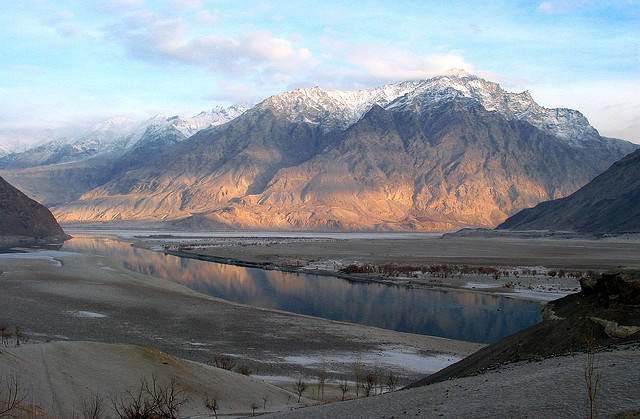
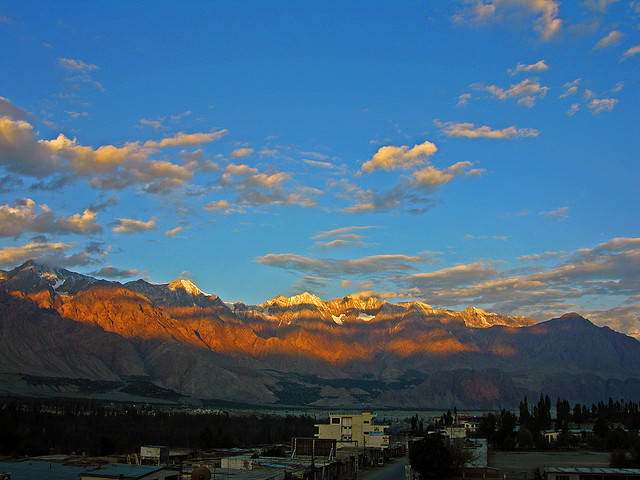
Skardu Valley is part of the Baltistan. Baltistan is spread over an area of 26,000 square kilometres – just right below the jagged and glaciated ramparts of the Karakoram. Once part of Laddakh, it was known as Tibet-i-Khurd – Little Tibet. Archaeological exploration has proven that it was encompassed by the Silk Trade Route.
 |
| Shangrila – Pakistan |
Shangrila Resort Skardu, also known as “Heaven on Earth”, is nestled amongst some of the world’s highest peaks. It encircles the heart shaped “Kachura Lake” and is surrounded by fruit laden orchards and flower filled gardens.
 |
| Lake Saiful Muluk – Pakistan |
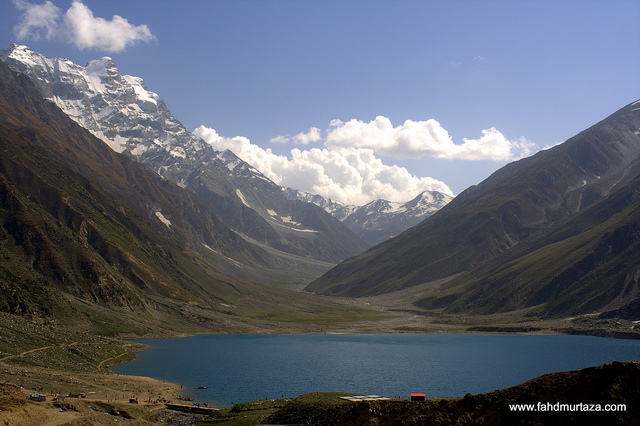
Lake Saiful Muluk is a lake located at the northern end of the Kaghan Valley near Naran. A fairy tale called Saiful Muluk, written by the famous sufi poet Mian Muhammad Bakhsh, is associated with the lake. It is the story of prince of Persia who fell in love with a fairy princess at the lake. The impact of the lake beauty is of such extent that people believe that fairies come down to lake in full moon.
The Grand Canyon, United States |
| The Grand Canyon, United States |
 |
| The Grand Canyon, United States |
A steep gorge by the Colorado River, Arizona in the United States, the Grand Canyon has some truly enjoyable scenery. It is 277 miles in length, 4 to 18 miles in width, and about a mile deep. Scientists believe that the canyon was created by the Colorado River over a six million year period.


Native Americans built settlements in the caves within the canyon before the emigration of Europeans. It was also considered to be a site of pilgrimage by the Pueblo people. The first recorded visit to the Grand Canyon by the Europeans was in 1869. Although it is not the deepest canyon in the world, it is known for its extremely large size and beautifully intricate landscape. The Grand Canyon National Park is said to be one of the first national parks in the United States and it attracts more than five million visitors a year. Weather conditions in the Grand Canyon vary greatly between seasons as well as varying at different elevations. While winter snow is experienced by the higher forested rims, the inner gorge has a desert temperature because of the low elevation.
The Great Barrier Reef, AustraliaOne of the natural wonders of the world, the Great Barrier Reef off the east coast of Australia is the world’s largest coral reef. It has the distinction of being placed in the World Heritage as well as the National Heritage lists.
 |
| The Great Barrier Reef, Australia |
 |
| The Great Barrier Reef, Australia |

With more than 600 islands and coral cays, the reef covers more than 300,000 sq. km. Corals make up the reefs and cays and are responsible for a huge variety of sea life in the reef — green turtles, several varieties of whales and dolphins, the dugong, about 4000 types of mollusks, 1500 different species of fish, as well as beautifully colored bird life encompassing at least 200 species. The Great Reef Marine Park is a huge tourist attraction with millions of tourists visiting the area each year. Sporting activities include reef sailing, scuba diving, and snorkeling, amongst others.
Cape Town, South AfricaAptly called “Heaven on earth,” this beautiful town at the tip of the African continent, with small roads surrounded by huge mountains, makes a person feel small; showing how marvelous and dominating nature can actually be.
 |
| Cape Town 'ANigt Sigt', South Africa |


The Cape Dutch style buildings depict the architectural heritage of the place. Beauty abounds in the black clouds that seem to pay homage to Table Mountain at all times. Cape Point, Signal Hill, Chapman’s Peak Drive, Victoria & Alfred Waterfront, Robben Island, Rhodes Memorial, and the beaches are some of the famous tourist attractions. Located on the shore of Table Bay, Cape Town is famous for its natural floral kingdom as well as its harbor. This town is one of the most popular tourist attractions of South Africa with its wine tasting day trips, whale watching, and dolphin watching.
Taj Mahal, IndiaThe Taj Mahal in India is one of the wonders of the world and is one of the most beautiful mausoleums constructed by the Mughal emperor, Shah Jahan, in memory of his favorite queen, Mumtaz Mahal. Located in Agra, white marble was used in the construction of this symbol of love, and the Taj Mahal is considered to be the pinnacle of Mughal architecture.
 |
| Taj Mahal, India |
 |
| Taj Mahal, India |

As the story goes, the emperor was grief-stricken when he lost his beloved third wife, Mumtaz Mahal. It took thousands of craftsmen and artisans, and about twenty years to construct it. The masons, stone cutters, carvers, inlayers, calligraphers, painters, and others were brought from throughout the entire empire as well as from Iran and Central Asia. Semi-precious stones were used for inlay ornamentation. It later became the mausoleum of Shah Jahan too. This is a huge tourist attraction with one to two million tourists visiting it every year.
Canadian Rockies, CanadaThe majestic Canadian Rockies are the Canadian segment of the North American Rocky Mountains. They are a visitor’s wonderland and the playground for western Canada. They are older than the American Rockies and are formed from over thrusting.
 |
| Canadian Rockies, Canada |
 |
| Canadian Rockies, Canada |

The Canadian Rockies house five national parks, and four of those national parks (along with other provincial parks) combine to form a single UNESCO World Heritage Site that consists of beautiful mountain landscapes, lakes, canyons, waterfalls, glaciers, peaks, limestone caves, and fossils. Mount Robson is the highest peak of the Canadian Rockies and climbing it is considered a challenge. These beautiful mountains are a haven for hikers and walkers alike.
Machu Picchu, PeruMachu Picchu in Peru, which means ‘Old Peak,” is one of the most enigmatic ancient sites in the world. According to legend, Machu Picchu was long ago considered to be a sacred place. The credit for the creation of the extraordinary city goes to the Inca people who have erected many stone structures and turned the place into a work of art.
 |
| Machu Picchu, Peru |
 |
| Machu Picchu, Peru |

Two thousand feet above the Urubamba river, these ruins consist of baths, temples, palaces, and about 150 houses, all very well preserved. These gray granite structures, some of which weigh more than 50 tons, are so perfectly sculpted that they are nothing less than works of architectural genius. They were rediscovered by a Yale archaeologist in 1911. The ethereal beauty, workmanship, and history of the place attracts millions of tourists each year.
The Pyramids, EgyptThe Egyptian pyramids are massive monuments with a square base and four triangular sides rising up to a point. There is still a lot of curiosity (and many theories) as to how the pyramids were actually constructed.
 |
| The Pyramids, Egypt |
 |
| The Pyramids, Egypt |


It is generally believed that the Egyptians began constructing them after 2700 B.C. and that they were built as tombs for the pharaohs. The most well-known (and the largest) pyramids of Egypt are the Pyramids at Giza which are said to be the largest ever built. It’s said that the Great Pyramid at Giza took 23 years to complete, using a work force of around 30,000 people. About 118 pyramids have been identified, and they are popular and intriguing to tourists and home researchers alike.
Petra, JordanDescribed by the UNESCO as “one of the most precious cultural properties of man’s cultural heritage”, Petra is an archeological site on the slope of Mount Hor. It is one of the new wonders of the world and is famous for its rock-cut architecture.
 |
| Petra, Jordan |
 |
| Petra, Jordan |


This site was kept hidden until 1812 when it was discovered by a Swiss explorer. It was said to have been prepared by God for the Jewish people. Petra once flourished under the Roman empire but a rapid decline began with the Arabian trade being taken elsewhere. Then an earthquake caused a great deal of destruction. Tourists frequent the place to get a glimpse of the ruins of this beautiful city.
Great Wall of China, ChinaOne of the seven wonders of the world, the Great Wall of China is a man-made structure that was constructed over two thousand years ago and took about 100 years to complete. The vastness of this project brings to light the immense capabilities of man.
 |
| Great Wall of China, China |
 |
| Great Wall of China, China |

The constructions started in the 5th Century B.C. It is actually not a single wall, but rather many walls put together, and it stretches over 4,000 miles. It was constructed to protect the Chinese Empire from the Xiongnu people in the north. The wall was initially built of stone, grass, earth, and wood, but bricks were used once the production started. It is believed that about 2-3 million Chinese died during the construction project.
The Iguazu Waterfalls, Argentina-Brazil Border
Heralded as the most beautiful waterfalls in the world, the Iguazu Waterfalls are a true wonder of nature. They are located at the border of Argentina, Brazil, and Paraguay. While the Argentinean side allows visitors to walk right around the water or explore the National Park, the Brazilian side is known for its panoramic views and splendor.
 |
| The Iguazu Waterfalls, Argentina-Brazil Border |
 |
| The Iguazu Waterfalls, Argentina-Brazil Border |
 |
| The Iguazu Waterfalls, Argentina-Brazil Border |
First Lady Eleanor Roosevelt is believed to have exclaimed upon seeing these falls, “poor Niagara.” The area surrounding the falls provides ample opportunities for rock climbing as well as water sports. Iguazu has the distinction of having a greater annual flow than any other waterfall in the world.
With all of these, and many more beautiful places that exist in our world, we surrounded by choices. The only way to decide on the places to visit is to follow your heart. While some may love the tranquility of water, others may bury themselves deep in architectural miracles, ancient sites, or the serenity of a small town.